









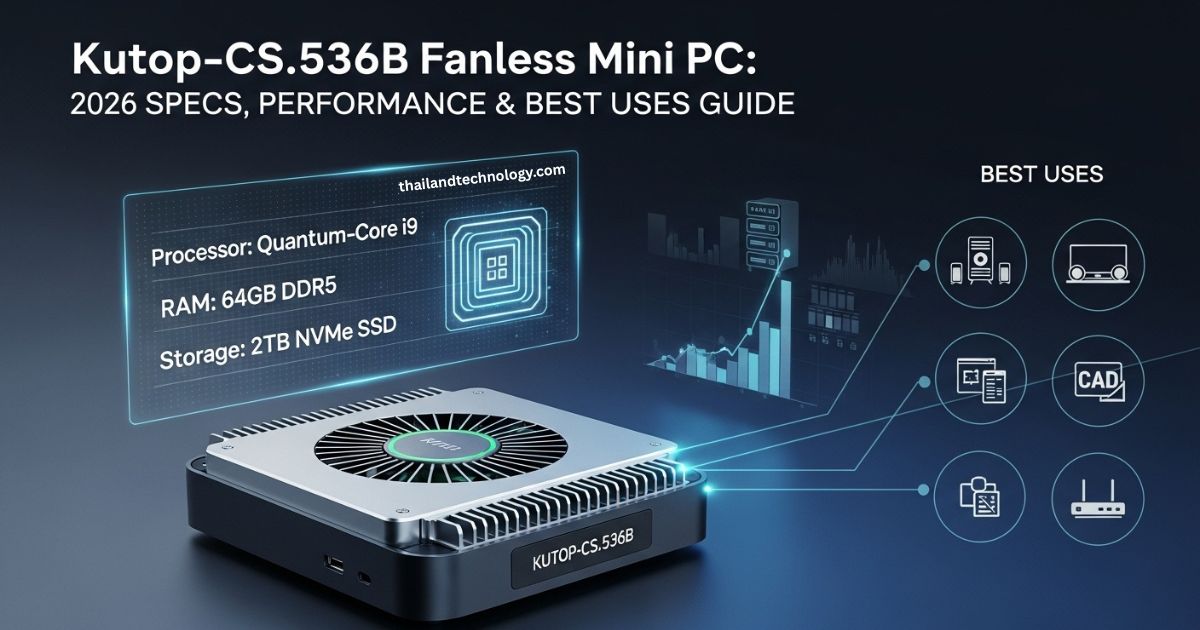
Hey, if you keep seeing “Kutop-CS.536B” pop up, you’re probably curious what it is. It’s a small, fanless mini PC built for tough jobs. It runs cool, stays quiet, and saves power. People use it at home, in factories, and for smart devices.
In this guide, I cover everything: what it is, its specs, where it shines, how to set it up, and more. I also add real tips and comparisons so you can decide if it’s right for you. Let’s get started.
What Is the Kutop-CS.536B?
The Kutop-CS.536B is a compact mini PC with no fan. That means zero noise and less dust buildup. It runs 24/7 without getting too hot.
It’s made for places where normal PCs fail – like dusty workshops or tight spaces. You get solid power in a small box. Think of it as a step up from a Raspberry Pi but tougher and faster.
Many people buy it for home servers, security setups, or small business tools. It handles heavy tasks without breaking a sweat.
Key Features and Full Specifications
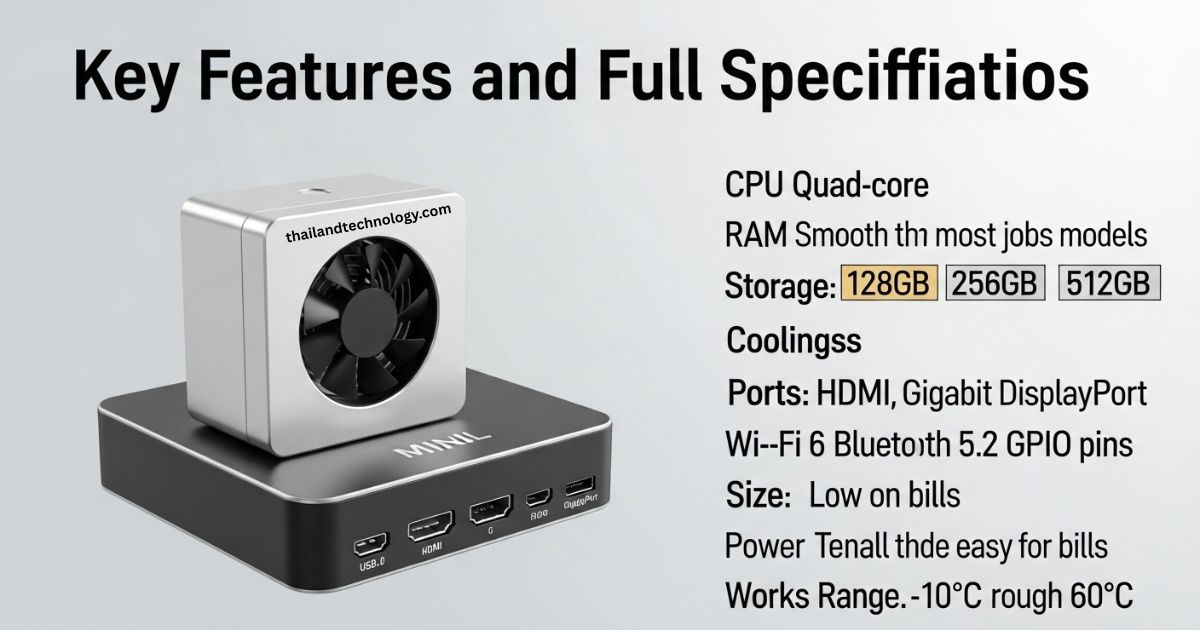
Here are the main specs. They make this mini PC stand out.
- CPU: Quad-core processor (handles multitasking well)
- RAM: 8GB (smooth for most jobs; some models go higher)
- Storage: SSD options – 128GB, 256GB, or 512GB (fast boot and quick file access)
- Cooling: Fanless (silent and reliable in hot spots)
- Ports: USB 3.0, HDMI, DisplayPort, Gigabit Ethernet, Wi-Fi 6, Bluetooth 5.2, GPIO pins
- Size: Small and easy to hide
- Power: Low draw (saves on bills)
- Temp Range: Works from -10°C to 60°C (great for rough places)
Here’s a quick table of the core specs:
| Part | Detail | Why It Matters |
|---|---|---|
| Processor | Quad-core | Good speed for many apps |
| RAM | 8GB standard | Runs several tasks at once |
| Storage | SSD 128-512GB | Fast starts, quick file work |
| Cooling | Fanless | No noise, no fan failure |
| Connectivity | Wi-Fi 6, Bluetooth 5.2, Ethernet | Fast internet, easy device links |
| Ports | HDMI, DP, USB 3.0, GPIO | Connect screens, drives, sensors |
These beat many cheap mini PCs in real use.
Best Use Cases for the Kutop-CS.536B
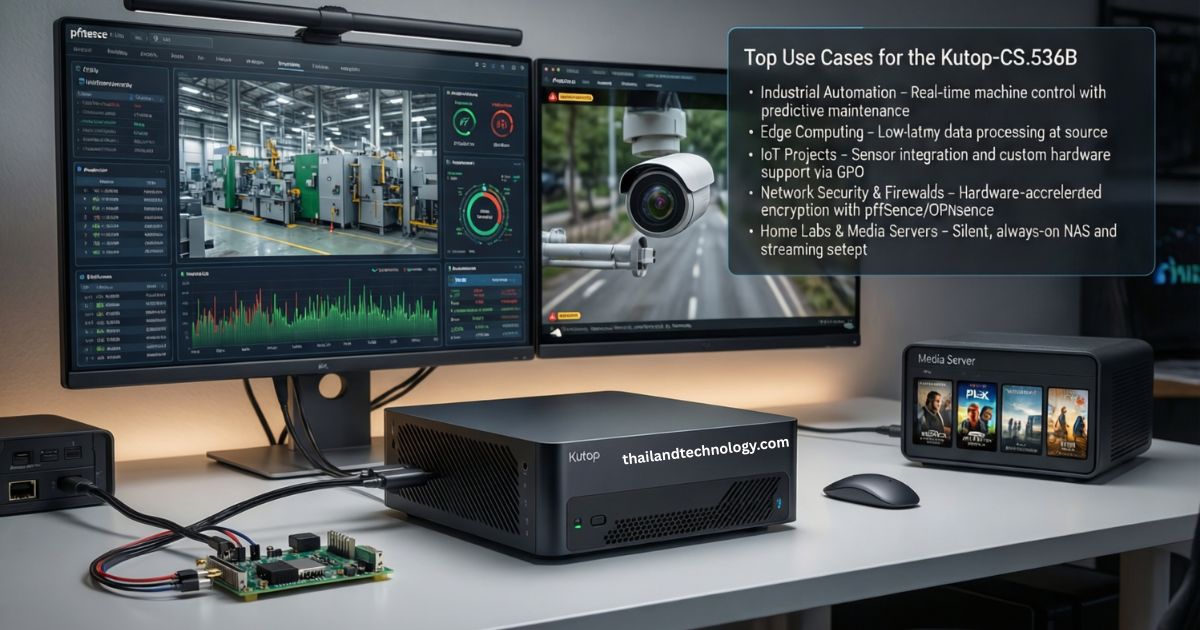
This mini PC fits many jobs. Here are the top ones.
Industrial Automation
Use it to control machines. It watches sensors and runs checks non-stop. Predictive maintenance is easy – spot problems before they stop work.
Edge Computing
Put it near data sources. Process info fast without sending everything to the cloud. Great for smart stores or traffic cams.
IoT Projects
Link sensors and devices. Collect data, run simple AI, or control lights and locks. GPIO pins make it simple to add custom parts.
Network Security and Firewalls
Run pfSense or OPNsense. It handles VPNs, traffic checks, and blocks threats. Hardware encryption keeps things safe.
Home Labs and Media Servers
Build your own NAS. Store movies, back up files, or run Plex. It’s quiet and stays on all the time.
Education and Research
Students use it for coding, robotics, or data tests. Researchers run models or prototypes without big machines.
Read: Iasweshoz1: Simple Guide to Automation & Security Framework 2026
Operating Systems It Supports
You can install many OS options:
- Linux (Ubuntu, Debian, CentOS) – best for servers
- Windows 10/11 IoT or Server – good for some software
- Proxmox or VMware for virtual machines
- Docker for containers
Pick what fits your project. Linux is popular because it’s free and light.
Power Use, Size, and Green Benefits
It uses little power – often under 20W at full load. That cuts your electric bill.
No fan means silent work. The box is small, so you can place it anywhere.
It’s RoHS compliant, so it’s better for the planet. Long life means less trash.
Here’s a quick power table:
| Mode | Power Use | Benefit |
|---|---|---|
| Idle | Low | Saves money all day |
| Full Load | Low-mid | Still efficient |
| Cooling | Fanless | Quiet, no dust issues |
Durability and Long-Term Use
Built tough. Solid-state storage resists shocks. Good thermal design keeps it cool.
It runs 24/7 with high uptime. Many users report years of service with no issues.
How to Set It Up (Step-by-Step Guide)
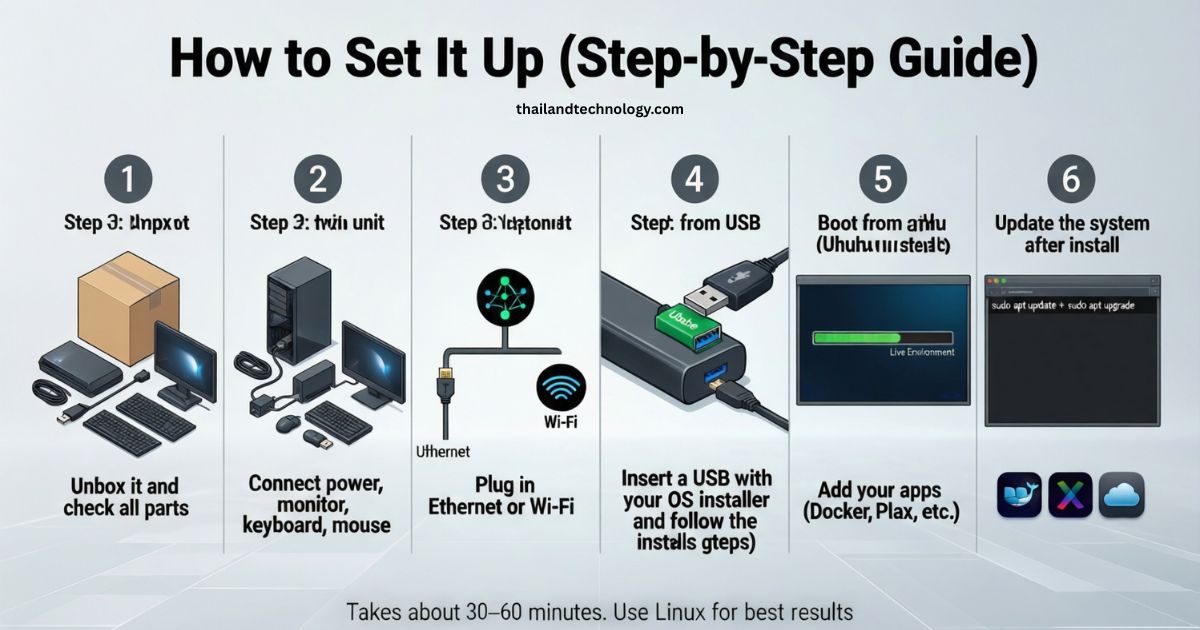
Setting up is easy. Here’s a simple guide:
- Unbox it and check all parts.
- Connect power, monitor, keyboard, mouse.
- Plug in Ethernet or Wi-Fi.
- Insert a USB with your OS installer (Ubuntu works great).
- Boot from USB and follow the install steps.
- Update the system after install.
- Add your apps (Docker, Plex, etc.).
- Test everything.
Takes about 30-60 minutes. Use Linux for best results.
Performance in Real Tests
On similar quad-core fanless units:
- Boots in under 15 seconds
- Runs 4K video fine
- Handles 5-10 Docker containers
- Good for light VM work
It beats Raspberry Pi in speed but uses a bit more power. Not for heavy gaming, but light games work.
Pros and Cons
Pros:
- Silent and cool
- Low power bill
- Tough build
- Many ports
- Great for 24/7 use
- Easy to hide
Cons:
- Not for heavy gaming
- Base RAM might need upgrade for big tasks
- Costs more than basic Pi
Comparison with Other Options
Here’s how it stacks up:
| Feature | Kutop CS.536B | Raspberry Pi 5 | Typical Gaming Mini PC |
|---|---|---|---|
| Power Use | Low | Very Low | High |
| Fanless | Yes | No (some yes) | No |
| Speed | Good | Fair | Very High |
| Industrial Use | Great | Okay | Poor |
| Price | Mid | Low | High |
| 24/7 Reliability | High | Good | Fair |
It wins for quiet, tough jobs.
FAQs About Kutop-CS.536B
What is the Kutop-CS.536B exactly? A small fanless mini PC for servers, IoT, and industrial work.
Can it run virtual machines? Yes, Proxmox or VMware works well for light VMs.
Is it good for gaming? Light games yes, but not for big titles.
Which OS is best? Linux (Ubuntu) for most users. It’s stable and free.
How does it compare to Raspberry Pi? Faster, more ports, better for heavy loads. Pi is cheaper for simple tasks.
Can I use it as a firewall? Yes, pfSense or OPNsense run great.
Is it quiet? Totally silent – no fan.
What ports does it have? HDMI, DisplayPort, USB 3.0, Ethernet, Wi-Fi 6, Bluetooth.
Does it get hot? No, fanless design keeps it cool even in warm rooms.
Is it worth buying in 2026? Yes, if you need reliable, low-power performance.
Final Thoughts
The Kutop-CS.536B is a solid pick for anyone who wants a quiet, tough mini PC. It shines in home labs, security, IoT, and industrial spots. Low power, no noise, and good speed make it a winner.
If your project needs 24/7 work without hassle, give it a look. It solves many problems that bigger or weaker machines can’t.